
Real Life Simulation Games for Teens That Teach
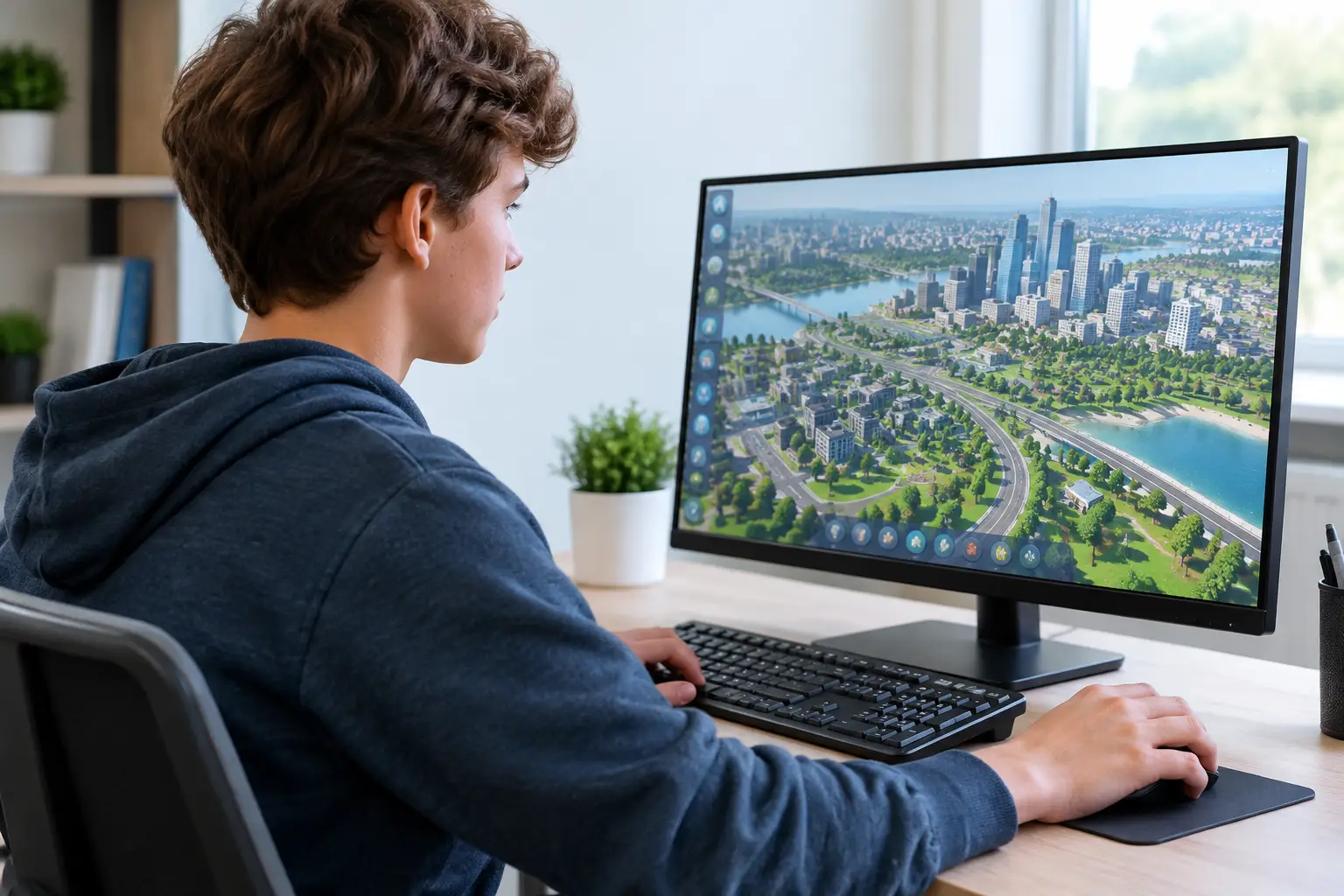
A teen manages a tight budget, decides whether to trust a new character, solves a problem after a plan fails, and sees the result of every choice. That is not a break from learning. It is learning with something at stake. Real life simulation games for teens can turn abstract ideas about money, relationships, work, safety, and responsibility into experiences young people can actually feel and remember.
For teens, relevance matters. They are moving closer to independence, yet many school lessons can still feel distant from the decisions waiting outside the classroom. A meaningful simulation gives them room to test judgment before the consequences are real. Play, act, discover, remember.
Why teens respond to real-world scenarios
Teenagers are often asked to prepare for adulthood through advice: make good choices, manage your time, think ahead, communicate clearly. Those are useful messages, but they can stay vague until a young person has a reason to use them.
A real-life simulation creates that reason. Instead of reading about opportunity cost, a player chooses between spending now and saving for something more important later. Instead of memorizing a definition of negotiation, they work through competing needs, limited information, and a conversation that can change direction. The idea becomes a pattern: choice, consequence, adjustment.
This matters because teens do not all learn best by listening, reading, or repeating a correct answer. Some need to see a system in motion. Some need to make a mistake safely. Some need the satisfaction of discovering the rule for themselves. A well-designed game respects those differences without lowering the challenge.
What makes a simulation feel real
Not every game about a job, a city, or a family decision creates meaningful real-world learning. The strongest experiences do more than add a realistic setting. They give players choices that matter, feedback they can use, and enough repetition to notice patterns.
Choices need trade-offs
Real life rarely offers one obviously correct answer. A teen may need to choose between speed and quality, helping one person and meeting another commitment, or taking a short-term reward that creates a later problem. Those tensions are where judgment grows.
Games should not punish every imperfect choice. They should make consequences understandable. If a player overspends, misses an important detail, or rushes a decision, the game can show what changed and allow another attempt. This is not failure as a label. It is feedback as information.
Feedback needs to arrive while the decision is still alive
Immediate feedback helps players connect action to outcome. If the result appears long after the choice, the lesson can feel random. When the consequence is clear, a teen can ask better questions: What did I miss? What could I try next time? Which signal mattered most?
That loop builds practical confidence. Players learn that competence is not the same as getting everything right on the first try. It is noticing, adapting, and trying again with a stronger plan.
The scenario needs human stakes
A budget spreadsheet can teach useful math. A story about keeping a community project alive on a limited budget can teach math, priorities, and empathy at once. Context gives decisions weight.
The goal is not to make every game dramatic. It is to make the player care. Relationships, time pressure, goals, competing perspectives, and limited resources can all create a reason to pay attention. Attention is the starting point for durable learning.
Skills teens can practice through simulation
The value of simulation is not that it predicts exactly what life will be like. Life is messier than any game. Its value is that it lets players rehearse transferable ways of thinking.
Financial decision-making is an obvious example. Teens can practice planning, comparing needs and wants, responding to unexpected costs, and noticing the long-term effect of small choices. The lesson is not simply “spend less.” It is learning to make a plan, revise it, and understand what a decision asks them to give up.
Social and communication skills also fit naturally. A player might need to listen for what another character needs, decide how to respond under pressure, or repair trust after a misunderstanding. No game can replace real relationships, but it can make reflection less intimidating. A teen can test a response, observe the result, and consider another approach without the fear of public embarrassment.
Career exploration can become more useful when it moves beyond job titles. Simulations can reveal the habits behind different roles: organizing information, serving customers, managing risk, collaborating, creating, troubleshooting, or making ethical decisions. A teen may discover that they enjoy solving logistical problems, not just that they have heard of a particular profession.
Community and civic scenarios can build perspective, too. When players balance needs across a neighborhood, organization, or team, they see that decisions affect more than one person. They begin to recognize systems, trade-offs, and the value of asking who benefits, who is left out, and what information is missing.
How parents and educators can choose well
The best real life simulation games for teens do not need to announce a lesson every few minutes. In fact, a game can lose its energy when it interrupts play to explain what the player is supposed to have learned. Look for experiences where learning is embedded in the action itself.
Start with the teen, not the subject label. A young person interested in mysteries may engage with a problem-solving scenario before they engage with a game marketed as financial literacy. A teen who cares deeply about animals, fashion, sports, music, or social causes may be more willing to practice planning and decision-making inside that world. Interest opens the door. The challenge gives the experience staying power.
It also helps to consider how much freedom the game offers. Some teens thrive with open-ended systems and many possible routes. Others prefer a clearer story, smaller decisions, and guidance that arrives at the right moment. Neither preference is better. The aim is a productive level of challenge, not confusion.
Ask a few simple questions after play: What choice felt hardest? What happened that you did not expect? What would you do differently next time? These are invitations, not quizzes. If a teen does not want to talk right away, let the experience settle. Reflection can happen during a walk, a car ride, or the next time a similar choice appears in real life.
The difference between simulation and a lecture in disguise
A simulation stops working when every decision leads to the same approved answer. Teens can sense when a game is really a worksheet wearing a costume. If the only goal is to select the response an adult wants, players learn to perform compliance rather than exercise judgment.
A better experience allows for meaningful consequences without pretending that every situation has one perfect solution. It makes room for different strategies. One player may take a cautious route, another may experiment, and both may learn something valuable from the outcome. The feedback should help them see the pattern rather than simply declare a winner.
That approach is especially important for teens who have felt disconnected from conventional instruction. They may not need more reminders to pay attention. They may need a reason to care, an active role in the outcome, and a chance to learn through doing.
Learning that stays after the game ends
The most useful games do not try to replace life. They prepare teens to meet life with more awareness. A simulated decision cannot reproduce the pressure of a first job, a difficult conversation, or a major purchase. But it can give a young person a mental rehearsal: I have seen a version of this problem. I know I can pause, assess, and choose.
That is why immersive learning matters. When knowledge is attached to an action, a consequence, and a second attempt, it has more places to stick. A teen does not just hear that planning matters. They experience why it matters.
Real world adventures give young people a place to practice before the stakes are permanent. Let them make choices, notice what happens, and return with a better idea. Live the experience. Keep the knowledge.