
Games That Teach Decision Making Through Play
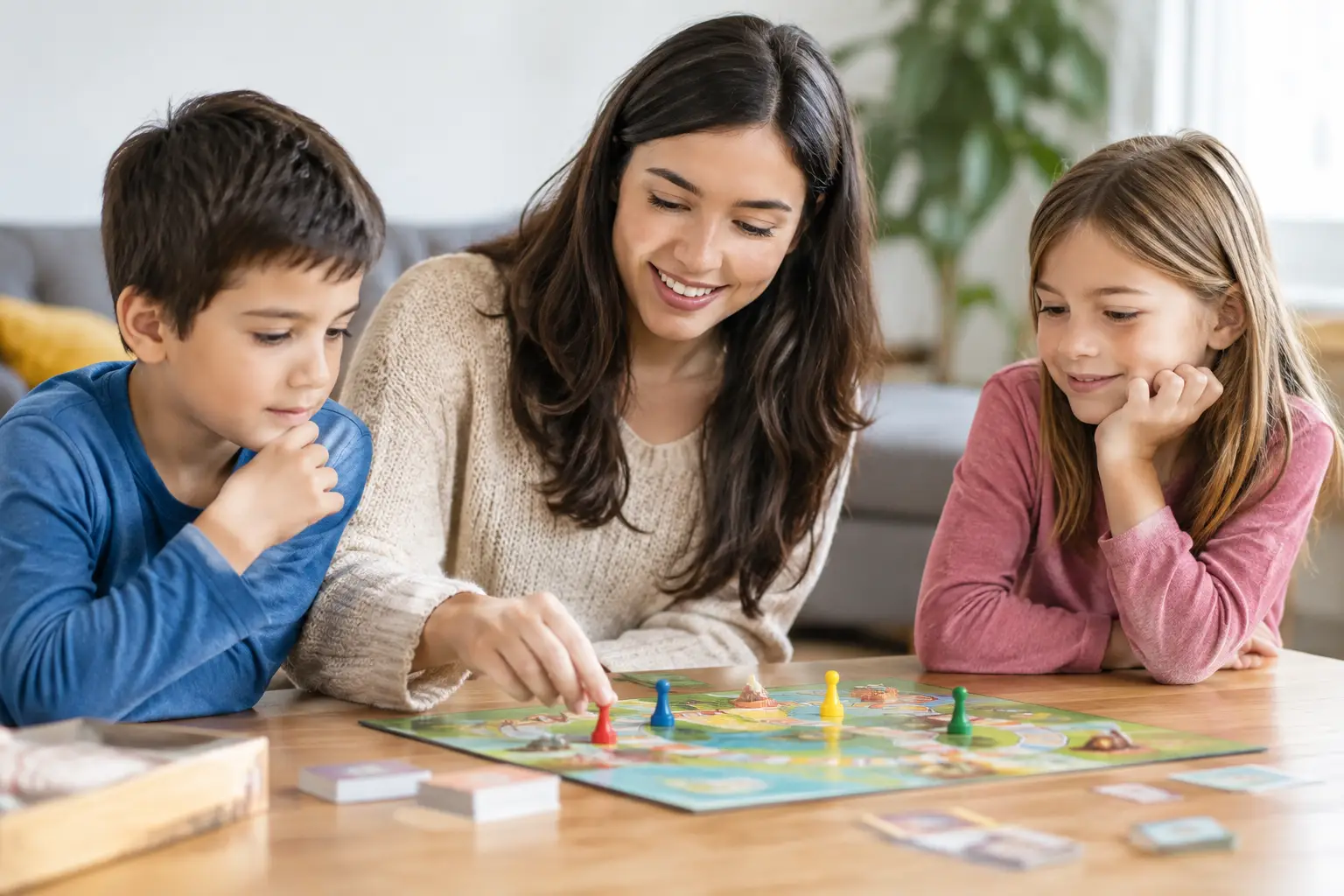
A child faces a locked gate, a limited supply pack, and a teammate who needs help. There is no single instruction telling them what to do. They have to notice what matters, weigh the risk, choose a path, and see what happens next.
That is why games that teach decision making can be so powerful. A meaningful game does not ask learners to memorize the definition of a good choice. It gives them a reason to make one. Play turns an abstract skill into a lived experience: act, discover, adjust, remember.
For parents and educators, the goal is not to find a game that always rewards the fastest answer. It is to create room for learners to practice judgment while the stakes are safe enough to try, fail, and try again.
Why decision making needs practice, not just advice
Most young people hear plenty of advice about choices. Think ahead. Be responsible. Consider the consequences. Those phrases are useful, but they can remain distant until a learner has a real decision in front of them.
Decision making is a pattern of attention. What information do I notice? What do I ignore? Whose needs belong in this choice? What might happen now, and what could happen later? A lecture can name these questions. A well-designed game makes them necessary.
When players must decide whether to conserve a resource, investigate a clue, negotiate with another player, or change course after new information appears, they begin connecting actions to outcomes. The connection becomes stronger when the game offers feedback quickly enough for the choice to still feel real.
This is also why repetition matters. One successful decision may be luck. Several decisions across changing situations help a learner see the underlying pattern. They start to recognize, for example, that rushing can cost information, that collaboration can reveal options, or that a small short-term sacrifice can protect a larger goal.
What makes games that teach decision making work
Not every game with choices builds judgment. Some choices are cosmetic. Others offer a correct answer so obvious that players simply hunt for the game designer's preferred move. Useful decision-making games create choices with genuine tension.
A player should have a goal, limited information, and consequences they can understand. They may need to choose between speed and safety, independence and teamwork, certainty and exploration, or an immediate reward and a future advantage. None of these trade-offs needs to be dramatic. In fact, small choices often teach the clearest lessons because learners can trace the result back to what they did.
The strongest experiences also make feedback part of the adventure. If a route proves difficult, a resource runs low, or a character reacts differently than expected, the game is saying something without stepping outside play to deliver a lecture. The learner receives information, not a verdict.
That distinction matters. Feedback should invite another attempt rather than label a child as careless, smart, impulsive, or wrong. A decision that does not work is not wasted time. It is evidence. What changed? What did the player miss? What could they test next time?
Choice needs a visible consequence
Consequences do not have to mean punishment. They can mean new information, a changed route, an altered relationship, or an opportunity that disappears. The key is visibility. If players cannot see how their action shaped the next moment, the learning loop breaks.
A good game lets learners say, in their own words, I chose this, and then that happened. This simple connection builds agency. It teaches that choices are not random events happening around them. Their actions help shape what comes next.
Uncertainty belongs in the experience
Real-life decisions rarely arrive with complete information. A game that includes uncertainty can help learners become more comfortable pausing, asking questions, and making a reasonable choice without perfect certainty.
There is a balance. Too much unpredictability can make a game feel arbitrary, especially for younger players. The best challenge gives enough clues for careful observation to matter. Players should be able to improve their decisions through attention, not merely hope for better luck.
The decision-making skills play can grow
Decision making is not one skill. It is a group of habits that work together under pressure, curiosity, and uncertainty. The game format can make those habits visible.
A player may practice prioritizing when several problems compete for attention. They may practice perspective-taking when another character's needs change the best path forward. They may practice flexible thinking when a plan fails and the group must adapt rather than quit.
They also practice emotional regulation. A missed clue, a lost turn, or an unexpected setback can bring frustration to the surface. In a supportive play environment, learners can feel that reaction, recover, and choose again. That recovery is part of decision making. Clear thinking is easier when a person knows they can respond to a setback instead of being defined by it.
For teens, decision-rich games can also open conversations about values. Is the fastest path always the best one? When is it worth taking a risk? What do we owe a teammate? These are not questions with one permanent answer. They are questions learners need to encounter repeatedly as their judgment grows.
How to choose the right game experience
Start with the kind of decisions you want learners to practice. A cooperative adventure may be especially useful when the goal is communication, shared planning, and considering other perspectives. A mystery or investigation can strengthen observation and reasoning from incomplete evidence. A resource-management scenario can bring trade-offs and long-term planning into focus.
Then consider the learner. Some children enjoy quick choices and energetic competition. Others need time to study the situation, talk through possibilities, or test a plan quietly. A game does not need to fit every learner in the same way. It needs to offer a meaningful entry point and enough safety for that player to participate.
Age matters, but so does emotional distance. A game about real-world choices can be engaging without reproducing a child's most sensitive challenge too closely. Adventure gives learners space to explore difficult ideas through a scenario. They can care deeply about the outcome while still having room to experiment.
Look for experiences where the learning is embedded in the action. If the game repeatedly pauses to explain its lesson, players may begin to feel they have left the adventure for a worksheet. The better question is not, What fact did this game teach? Ask, What did the player have to notice, decide, and do?
Keep the conversation light and useful
A short reflection after play can help the experience settle into memory. It does not need to become a formal debrief or a test. Often one genuine question is enough: What made that choice hard? What clue changed your mind? What would you try if you played again?
Let the learner lead when possible. Adults can be tempted to point out the lesson immediately, especially when they saw a better option from the sidelines. But explaining too soon can take ownership away from the player. Give them a moment to connect the dots.
If a choice led to a disappointing outcome, resist turning it into a warning. Curiosity works better than correction. Ask what they were hoping would happen and what information they would want next time. This keeps the focus on process, not performance.
In a classroom or group setting, invite players to notice that different decisions can be reasonable. One learner may value caution while another values speed. The conversation becomes richer when students explain their reasoning, listen to alternatives, and see that good judgment includes revising a view when new evidence appears.
Let learners live the choice
Decision making becomes durable when it is more than a rule on a poster. Learners need chances to choose, see consequences, recover from surprises, and recognize a better path the next time.
That is the promise of real-world adventures in play. ImmersiveMinds Games is built around this kind of participation: learners do not stand outside the lesson and watch it happen. They live the experience. Then, when a meaningful choice appears beyond the game table, they may recognize the pattern and meet it with more confidence.