
Games for Different Learning Needs That Engage
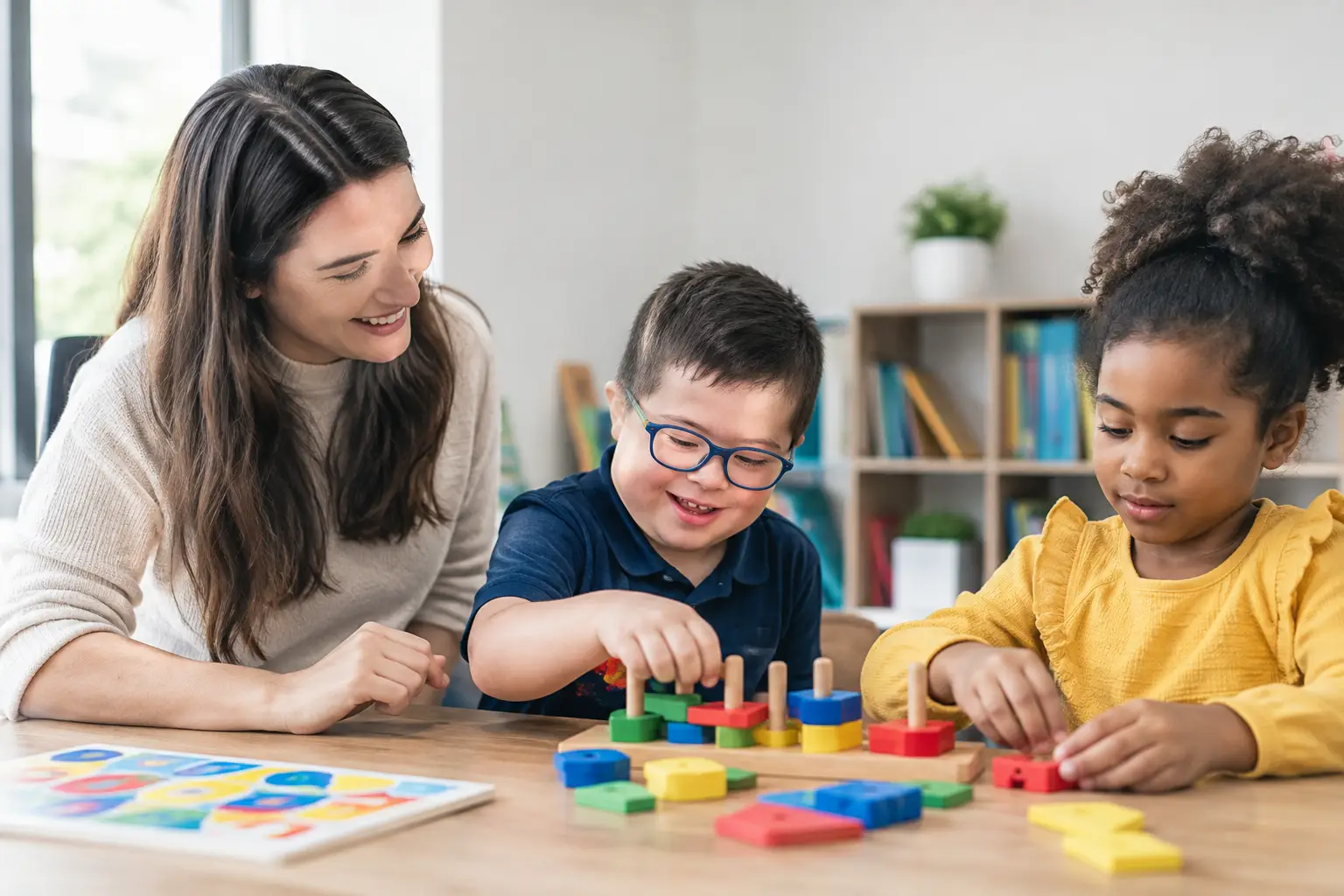
A child who loses focus during a page of instructions may become completely absorbed when they have to manage supplies, read a situation, or make a choice that changes what happens next. That difference matters. Games for different learning needs do not ask every learner to succeed through the same narrow doorway. They create more ways in: action, story, strategy, trial, conversation, and consequence.
The goal is not to make learning look like a game after the real learning is over. The game can be the learning environment itself. Players pay attention because something is happening. They act because their decisions matter. They remember because they lived the result.
Different learning needs do not mean different potential
Learners vary in how they enter an experience, hold information, express understanding, and recover from frustration. Some need movement or a clear purpose before their attention settles. Some need time to test an idea privately before speaking. Some understand a concept quickly when they can see it in context, yet struggle when it arrives as an abstract definition.
This is true for learners with diagnosed disabilities, learners who are developing confidence, multilingual learners, highly curious learners, and children whose strengths are simply not well served by long explanations. A respectful learning experience starts from a simple belief: differences in access are not differences in intelligence.
A well-designed game does not promise that one format works for everyone. It offers multiple ways to participate. One player may lead by noticing patterns. Another may remember a clue from an earlier round. A third may organize the group, ask a useful question, or try the bold solution no one else considered. Each role can reveal real thinking.
That is especially valuable for children and teens who have come to expect schoolwork to expose what they cannot do. In a meaningful adventure, the emphasis shifts. The learner is not being asked to perform understanding on command. They are using understanding to move forward.
What games for different learning needs should provide
Not every colorful activity is an inclusive learning game. The strongest experiences make participation meaningful, keep the learning connected to the player's actions, and allow learners to learn from consequences without feeling punished for getting something wrong.
A reason to pay attention
Attention is not a switch that can be flipped by instruction. It is often a response to relevance. When a player needs information to solve a problem, protect a resource, negotiate a decision, or uncover what happened, the information has a job to do.
A historical fact can feel distant when it is presented as a date to memorize. Place that fact inside a decision with limited resources and competing priorities, and it becomes part of the situation. A science principle becomes more memorable when a player uses it to predict an outcome. Math becomes practical when a choice depends on quantity, timing, risk, or trade-offs.
The learning is not hidden in the sense that it is accidental. It is embedded. The player can feel why the knowledge matters before being asked to name it.
Choices with visible consequences
Choice gives learners agency, but only when the choices lead somewhere. If every path ends in the same result, the player learns that their decisions do not matter. If a choice changes available options, reveals a new problem, or produces useful feedback, the learner begins to notice cause and effect.
This is a powerful support for learners who disengage when answers seem arbitrary. They can test an approach, see what follows, revise their thinking, and try again. The correction comes from the experience, not only from an adult saying, “That is wrong.”
For some learners, immediate feedback reduces uncertainty. For others, it builds persistence. Either way, feedback works best when it is specific enough to guide the next move. “Try again” is less useful than seeing why a resource ran out, why a plan created a new obstacle, or why a clue did not fit the evidence.
Repetition that does not feel repetitive
Practice matters. Yet repeating a worksheet can feel like being asked to prove the same thing again and again. Games can create a more natural form of repetition by returning players to a pattern in changing circumstances.
A learner may use the same reasoning skill across several rounds, but the stakes, information, and choices shift. They are not merely rehearsing an answer. They are building a pattern of thought. Over time, the action becomes more fluent: notice, decide, check, adjust.
This is where durable understanding grows. Play, act, discover, remember.
Room for different ways to contribute
A game becomes more inclusive when success is not reserved for the fastest reader, loudest speaker, or quickest calculator. Clear visual cues, manageable instructions, flexible roles, and opportunities to think aloud or think quietly all widen access.
For group play, roles can help without becoming rigid labels. A learner who finds public speaking difficult may be the map reader or evidence keeper. A learner who needs movement may manage materials or track progress. A learner ready for more challenge can compare options, explain a strategy, or predict the next consequence.
The right level of support depends on the player and the moment. Some learners benefit from reading instructions together, reducing the number of choices, or pausing between rounds. Others need more complexity, more independence, or a harder decision. Inclusion is not making every experience identical. It is making meaningful participation possible.
Keep the learning inside the adventure
There is a common temptation to stop a game every few minutes and turn it into a lesson. Sometimes a brief pause helps. Too many pauses can break the very attention the experience worked to earn.
Instead, let the adventure carry the learning first. Give players time to face the problem, make a decision, and experience the result. Then use a short reflection to help them name what they noticed. Questions such as “What made that choice work?” or “What would you change next time?” invite thinking without turning play into a test.
For parents, this can mean resisting the urge to correct every move. Watch for the moment when a child recognizes a pattern on their own. For educators, it can mean listening for reasoning rather than only checking whether the final answer is correct. A surprising choice can reveal more about a learner's thinking than a perfect response on a page.
ImmersiveMinds Games is built around this principle: real-world adventures give knowledge a place to live. Players do not begin with a lecture about what they should remember. They enter a situation, act within it, and carry the insight forward.
Choosing a game with care
When selecting a learning game, begin with the experience you want learners to have, not only the subject label on the box. Ask whether players will make meaningful decisions, whether feedback helps them improve, and whether the challenge respects their age and readiness.
Consider practical access, too. Is the reading load appropriate? Can players participate in more than one way? Does the pace allow time to think? A fast game can be exciting, but it may overwhelm a learner who needs processing time. A highly open-ended game can inspire one group and frustrate another that needs clearer structure. Neither approach is automatically better. Context matters.
It also helps to choose games that leave room for conversation after play. The best reflection is usually brief and connected to what just happened. A child who says, “I thought that would work because…” is already practicing explanation, self-awareness, and flexible thinking.
Let learners lead the next move
Learning becomes more lasting when a player feels, “I figured something out.” That feeling does not come from making every challenge easy. It comes from meeting a challenge with enough purpose, support, and freedom to try.
Set the scene. Hand over the choices. Let the consequences teach. Then make space for the learner to tell you what they discovered.
Live the experience. Keep the knowledge.