
How Real World Educational Games Build Lasting Memory
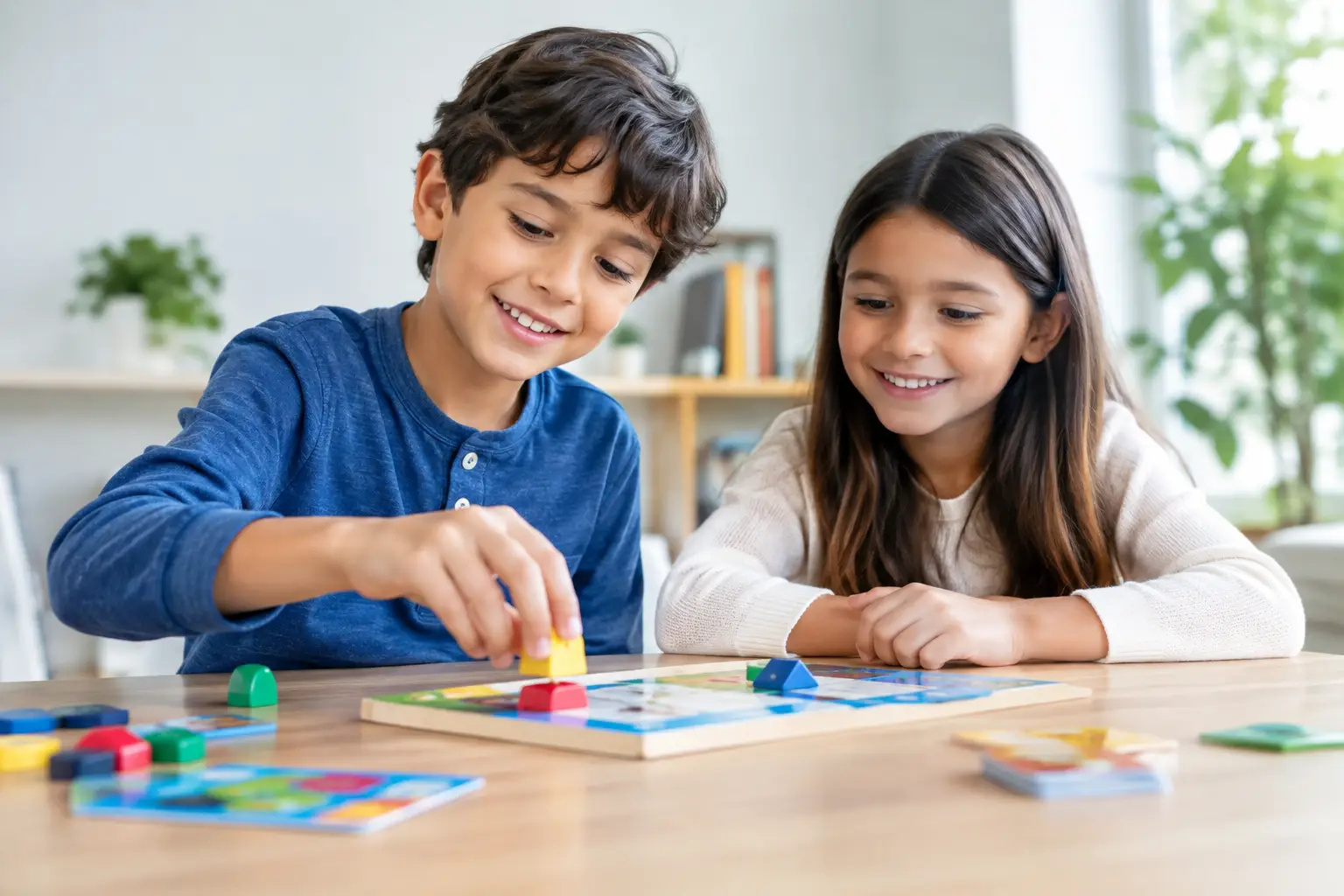
A learner is not likely to remember a definition because it appeared on a screen. They are far more likely to remember what happened when they had to use that idea to solve a problem, make a choice, or recover from a mistake. That is the promise of real world educational games: learning is not paused for the game. Learning happens because of the game.
When players live an experience, attention has somewhere to go. A decision matters. A clue changes the next step. A consequence creates a reason to rethink. What might have felt abstract in a lesson becomes part of a story they can recall.
Play → act → discover → remember.
Why real world educational games hold attention
Attention is not a reward learners earn by sitting still. It is a response to meaning. When a young person is asked to memorize information without a clear purpose, their mind may reasonably ask, “Why does this matter?” A real-world scenario answers that question through participation.
Perhaps players must manage limited resources, interpret evidence, communicate a plan, or choose between two imperfect options. The knowledge is no longer floating on its own. It is attached to a goal. Players want to know what comes next, and the information becomes useful because it helps them move forward.
This matters for families and classrooms alike. Disengagement is often treated as a discipline problem or a lack of effort. Sometimes it is neither. Sometimes the learning format has not given the learner enough agency, relevance, or room to think.
A well-designed game invites a different response: “Let me try.” That small shift changes the role of the learner. They are not simply receiving an answer. They are testing an idea inside an experience.
The learning happens in the choices
Not every game with a quiz is an educational game, and not every educational game creates lasting understanding. The difference is where the learning lives.
In a worksheet-style activity, the lesson often comes first and the game-like element is added afterward. Players may answer questions, collect points, and move on. That can provide practice, especially for facts that require repetition. But it can also make learning feel like a task wearing a costume.
In a meaningful adventure, the challenge itself calls for the knowledge. Players need to observe closely, notice patterns, weigh evidence, and adapt their approach. The game does not stop to announce the lesson at every turn. It lets the learner encounter why the lesson matters.
That approach does not mean hiding all guidance. Clear instructions, age-appropriate support, and thoughtful pacing are essential. It means guidance appears when it can help players act, rather than replacing the action entirely.
Consider the difference between being told that planning ahead reduces risk and having to plan a route with limited time, changing conditions, and consequences for a poor choice. The first may be understood for a moment. The second can be felt, discussed, and remembered.
Feedback turns experience into knowledge
Experience alone is not enough. A player can repeat an unhelpful strategy if nothing helps them recognize the pattern. This is where feedback matters.
Useful feedback is immediate enough to connect cause and effect. It shows players what their decision changed without shaming them for getting it wrong. A missed clue, a depleted resource, an unexpected outcome, or a new piece of information can all become feedback. Each response tells the learner something: try again, look closer, change the plan, or carry this insight into the next challenge.
The best feedback loops make room for recovery. If one wrong move ends the experience, players may become cautious rather than curious. If every choice succeeds, there is little reason to reflect. The productive middle gives learners a real stake in the outcome while allowing them to revise and return.
That is how mistakes become part of learning instead of proof that someone is not good at a subject. A mistake is information. In the right environment, it is an invitation to make a better next move.
Repetition without the feeling of drill
Lasting knowledge needs repetition. The question is whether repetition feels like a demand or a natural part of play.
Games can return players to the same core ideas through new circumstances. A learner may practice identifying patterns in one challenge, then use that same skill while making a decision under pressure later on. The context changes, but the mental move returns. This gives the brain more than one path back to the knowledge.
That is different from repeating the exact same question until an answer sticks. Direct practice has its place, particularly when fluency matters. Yet learners also need opportunities to recognize when a skill applies beyond the original example. Real-world educational games can create those opportunities through varied scenarios and repeated choices.
For a parent, this can look like a child bringing up a game decision at dinner because they are still working through what happened. For an educator, it can look like students referring back to an experience when discussing a new concept. The game has created a shared reference point, not just a completed assignment.
What makes a real-world game worth choosing?
A polished theme or exciting premise can capture interest, but it is not enough on its own. Before choosing an educational game, look for evidence that players will be asked to think and act.
First, ask whether the player has meaningful choices. If every path leads to the same outcome, the learner is mostly watching. Choices do not need to be overwhelming, but they should create a reason to consider information and make a judgment.
Next, notice whether consequences are understandable. Players should be able to see a connection between an action and what follows. Random surprises can be fun, but they do not reliably build understanding. A useful game helps learners recognize patterns over time.
Also consider whether the game respects different ways of learning. Some learners think best by reading. Others need to talk through a problem, move through a scenario, make a visual connection, or try several times before a pattern becomes clear. An experience that includes action, discovery, and reflection can welcome more learners into the process.
Finally, consider the role of an adult. Some games are strongest when a parent, teacher, or facilitator joins the reflection afterward. Others support independent exploration. Neither is automatically better. The right fit depends on the learner’s age, the complexity of the scenario, and whether the goal is shared discussion or self-directed practice.
Bringing the experience beyond the game
You do not need to turn play into a lecture for it to become meaningful. A few well-timed questions can help learners carry an insight forward: What did you notice? What changed when you chose that? What would you try next time? Where else might that idea help?
The key is curiosity, not correction. If an adult rushes to explain every outcome, the learner loses some ownership of the discovery. Give them time to name the pattern in their own words. Then add context when it is useful.
Educators can use these moments to connect an adventure to a larger unit without draining the energy from it. Parents can use them to notice how a child approaches uncertainty, collaboration, planning, or problem-solving. Independent learners can keep a brief note of choices that surprised them and strategies they want to test again.
At ImmersiveMinds Games, this is the heart of the approach: real world adventures give learners a place to participate first. The insight follows because it has been lived.
Learning that stays with the learner
The goal is not to make every subject feel like a game. Some learning requires quiet reading, careful practice, direct teaching, and sustained effort. The goal is to recognize that meaningful play can do something these methods do not always do on their own: give knowledge a lived context.
When learners act, discover consequences, receive feedback, and try again, they build more than a correct answer. They build a pattern for thinking. That pattern can travel with them into a classroom discussion, a family conversation, a future challenge, or a decision no game designer could predict.
Choose experiences that invite learners to live the question. The knowledge has a better chance of staying when it has somewhere real to belong.