
Educational Games for Homeschool Families That Stick
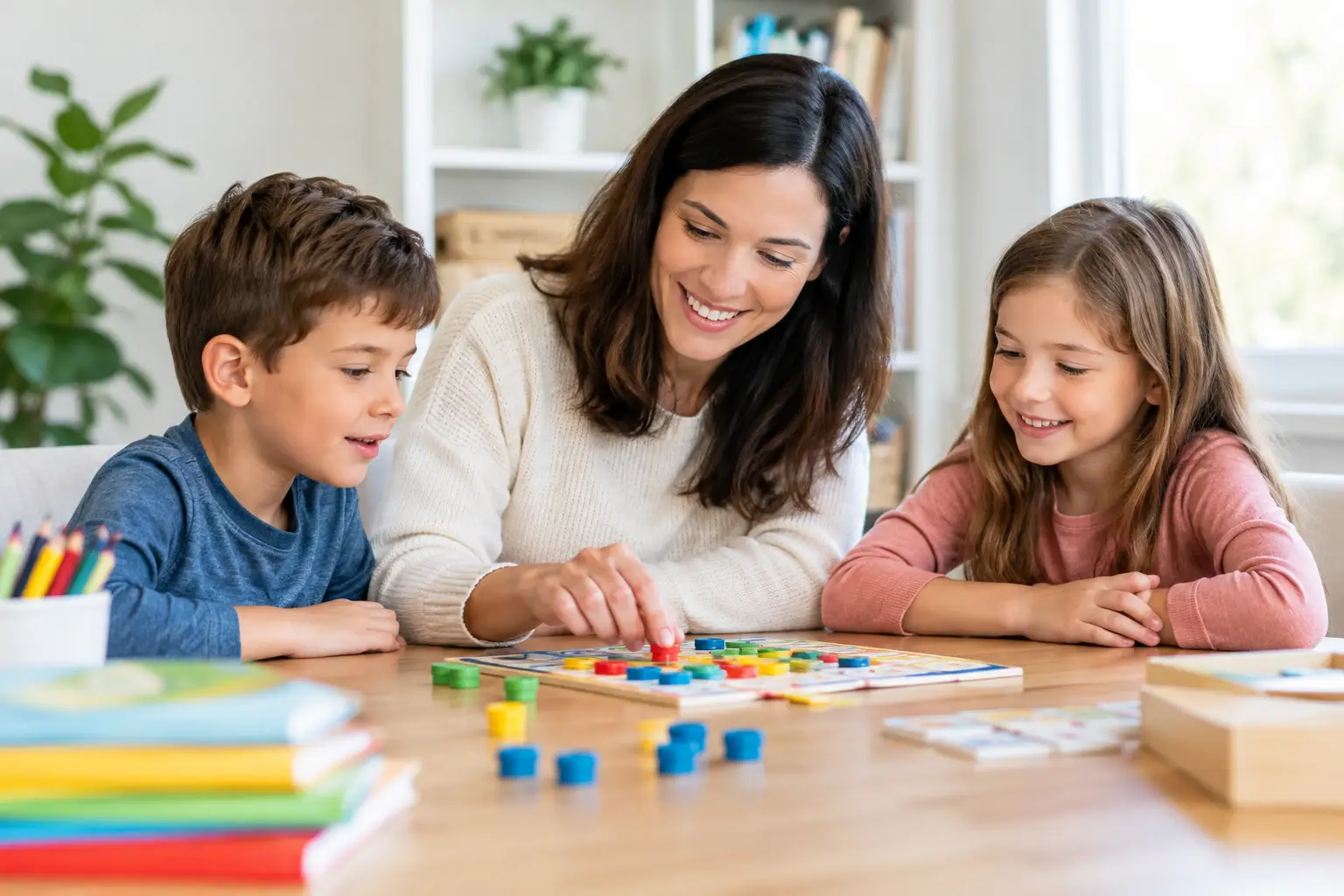
A child can memorize a rule at the kitchen table and forget it by dinner. Put that same rule inside a decision with a consequence, however, and it becomes useful. That is the promise of educational games for homeschool families: learning that has somewhere to go.
For homeschoolers, the goal is rarely to recreate a classroom at home. It is to build an education that fits real children, real attention spans, and real life. A well-chosen game can turn an afternoon into a real-world adventure where learners act, discover, adjust, and remember.
Why Educational Games for Homeschool Families Work
Games ask for participation. A player is not simply told that resources are limited, that a historical choice had consequences, or that a strategy needs revision. They face the problem, make a choice, see what happens, and try again.
That cycle matters. Attention opens the door to learning. Repetition gives an idea another chance to take hold. Feedback helps a learner notice what worked and what did not. Over time, patterns begin to form.
This is especially valuable in a homeschool setting because families can follow the learning while it is alive. A game about planning may lead naturally to a conversation about budgeting for groceries. A game built around geography may send everyone to a map, then into the neighborhood to notice how routes, landmarks, and distance shape decisions. The game is not a break from learning. It is the place where learning begins.
It also gives different minds more than one way in. Some children come alive through story. Others need movement, competition, collaboration, visual clues, or the freedom to test an idea without being corrected before they finish thinking. A meaningful game can make room for all of those approaches without reducing the experience to a worksheet with points.
Choose Games With a Real Job for the Player
Not every game labeled educational creates durable understanding. A quiz wrapped in bright graphics may offer practice, but it still asks the learner to retrieve an answer someone else has already defined. That can be useful at times. It is not the same as solving a problem.
Look instead for games in which the player has a genuine role. They might manage limited supplies, interpret evidence, negotiate with teammates, build a system, investigate a mystery, or choose between competing priorities. The learning should be embedded in what players must do to move forward.
The strongest experiences make choices matter. If every answer produces the same result, there is little reason to reflect. When a choice changes the path, players gain immediate feedback. They can connect action to outcome and decide whether they would make the same choice again.
A useful question is simple: if the educational label disappeared, would the game still be worth playing? If the answer is yes, the learning is more likely to feel natural rather than imposed.
Look for feedback, not just a final score
A final score tells a child where they landed. Feedback along the way helps them understand why. It might arrive through a changed situation, a new obstacle, a response from another player, or a resource that runs low after an unwise decision.
This does not mean every game needs a single correct answer. Real life rarely works that way. Some of the most valuable homeschool conversations begin when a choice was reasonable, but came with a trade-off. A learner who can explain what they gained, what they gave up, and what they would do differently is practicing far more than recall.
Let the challenge fit the learner
The best level of challenge sits just beyond automatic success. Too easy, and the game becomes background noise. Too difficult, and it becomes another source of pressure.
Homeschool families have an advantage here. You can adjust the pace, simplify a rule, add a second round, pair siblings as a team, or pause to investigate a question that catches someone’s interest. Adaptation is not cheating. It is responsive teaching.
Build Games Into the Week Without Making Them Another Assignment
A game does not need a formal lesson plan to be meaningful. In fact, over-explaining it before play can drain the curiosity that makes the experience work. Let the scenario do some of the teaching first.
Set aside time when everyone can be present. A rushed ten minutes between obligations may be enough for a quick review game, but a story-driven or strategy-focused experience needs room for players to settle in, make decisions, and see consequences unfold. For many families, one longer game session each week is more valuable than trying to force a game into every subject every day.
Afterward, resist the urge to turn every conversation into a test. Start with what happened. Ask what surprised them, which decision felt hardest, or what they noticed after trying a different approach. These questions preserve ownership. Children are more likely to reflect honestly when they do not feel that an approved answer is waiting.
If a concept deserves more attention, let it travel into the rest of the week. A game about survival can lead to measuring water use, reading firsthand accounts, researching local weather, or designing a better plan. A game about civic choices can become a family discussion about rules, fairness, and whose voice gets heard. The follow-up should feel like a continuation of the experience, not a punishment for enjoying it.
When Games Need a Partner
Games are powerful, but they are not required to carry every part of an education. Reading deeply, practicing handwriting, building fluency, creating art, and working through complex problems all have their place. The question is not whether games replace other methods. It is whether they add something those methods cannot easily provide.
Games are particularly strong when the learning involves systems, decisions, relationships, or consequences. They can help learners feel the tension of limited resources, competing goals, uncertain information, and changing conditions. Those are difficult ideas to absorb through explanation alone.
For foundational skill practice, the right game can add energy and repetition. But if a child is still building a core skill, choose an experience that supports confidence instead of masking confusion with speed or competition. Cooperative play is often a better fit than a race.
There are also days when a game will not land. A tired child may need quiet work. A competitive sibling dynamic may need structure or separation. A complex game may ask too much after a demanding week. Responsive homeschooling means noticing the difference between productive challenge and unnecessary friction.
Make Room for Replay and Retelling
A single playthrough can be memorable. Replay is where learners begin to see patterns. They test a new strategy, notice a detail they missed, and compare outcomes. The experience shifts from “What happened?” to “What changes if I do this instead?”
That is why replay value matters more than novelty. A shelf full of games played once may look impressive, but a few adventures that invite repeated decisions can become part of a family’s learning culture. Let children return to the games they choose on their own. Voluntary replay is a strong signal that attention is doing its work.
Retelling matters too. When children explain a dramatic decision to another parent, a grandparent, or a sibling who missed the game, they organize the experience in their own words. They are not merely reporting a fact. They are making meaning from action and outcome.
ImmersiveMinds Games is built around this kind of learning: real-world adventures where knowledge grows through participation, feedback, and the choices players make. The aim is not to hide a lesson inside a game. It is to make the experience itself worth living.
The most lasting homeschool moments are often not the ones that look most academic from the outside. They are the moments when a learner leans forward, tries something, changes course, and suddenly understands why the idea matters. Play the scenario. Make the choice. Let the knowledge stay.