
How to Teach Through Play That Builds Knowledge
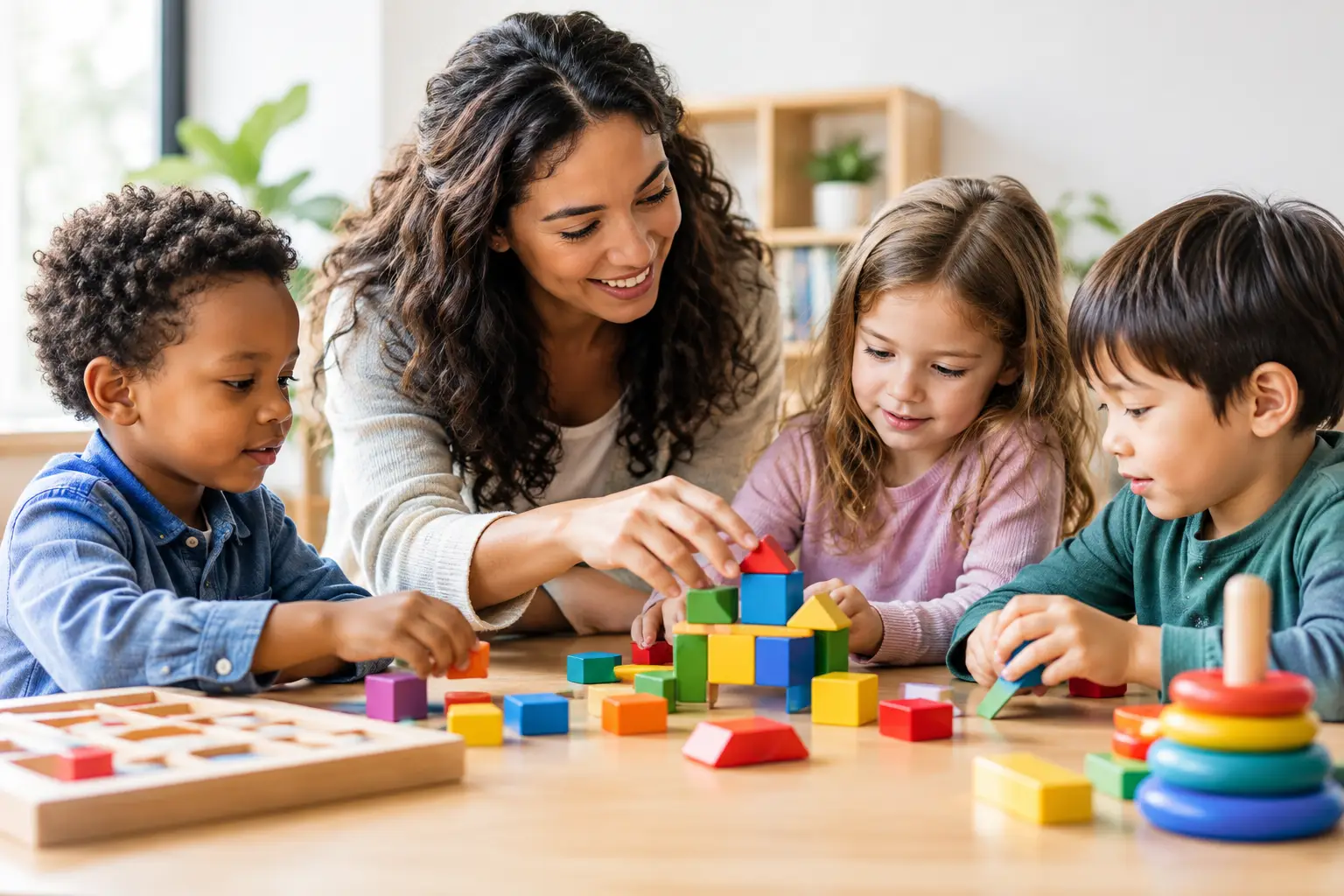
A child does not need to be told that a bridge needs balance after watching their carefully built crossing collapse under a toy car. They feel the problem, adjust the design, and try again. That is the heart of how to teach through play: make knowledge useful inside an experience, so learners discover why it matters before they are asked to remember it.
Play is not a break from learning. When it includes a purpose, a challenge, and room to make choices, play becomes the place where learning happens. A young person pays attention because the next move matters. They repeat an action because they want a different result. Feedback arrives through the experience itself. Over time, patterns begin to stick.
How to Teach Through Play Starts With a Real Purpose
The strongest play-based learning does not begin with a worksheet disguised as a game. It begins with a situation worth entering. A mystery needs solving. A community needs resources. A team has to plan a route, negotiate a trade, or respond to a changing condition.
The learning goal can be clear to the adult without becoming a lecture for the child. If you want to teach budgeting, create a scenario where players have limited resources and competing needs. If the goal is persuasive writing, let players campaign for a decision that affects the story. If you are exploring ecology, ask them to protect a habitat while managing consequences.
The point is not to hide learning behind flashy activities. It is to give knowledge a job to do. Facts become tools. Skills become moves. Reflection becomes part of finding a better way forward.
Build the Experience Around Action
Children and teenagers learn differently, but most learners remember what they have done with greater clarity than what they have merely been told. A useful learning game asks players to act, observe, decide, and adjust.
Start by identifying the action at the center of the lesson. For fractions, that might mean dividing supplies fairly. For history, it might mean making choices with the limited information available to people at a particular moment. For communication, it could mean decoding clues, listening for missing details, and persuading a group to choose a plan.
Then give the action a consequence. A choice should change something: the resources left, the path available, the information revealed, or the result for another player. Consequences make abstract ideas visible. They also create the productive tension that keeps attention in the room.
This does not require elaborate props or hours of preparation. A few cards, a timer, simple objects, and a well-framed challenge can be enough. The essential ingredient is participation. Learners need to have something meaningful at stake in the next decision.
Let Choices Be Genuine
A game loses much of its learning value when every player is pushed toward one obvious, pre-approved answer. Real choices invite reasoning. They make space for learners to test an idea, discover a weakness, and revise it without being labeled wrong.
Offer options with trade-offs. A fast route may carry more risk. Saving resources now may make a later challenge harder. Sharing information may build trust but reveal a strategic advantage. There does not need to be a perfect choice. There needs to be a reason to think.
For younger children, choices can be simple and concrete. Which materials will make the strongest shelter? What happens if we use all our food today? For older learners, the same structure can hold more complexity: How should a city respond to a water shortage? What evidence is strong enough to change a group decision?
Use Feedback That Belongs in the Game
Feedback is most powerful when it arrives close to the action. Instead of waiting until the end to say what worked, let the experience respond. The tower leans. The audience is unconvinced. The map reveals that the team has taken a longer route. The group runs out of tokens before reaching its goal.
This kind of feedback is not punishment. It is information. It tells learners, in a form they can feel, what their choice produced. That makes it easier to try again with more insight.
Adults still matter here. Your role is not to explain every outcome immediately. Watch first. Ask a question that returns attention to the experience: What changed when you chose that? What were you trying to protect? What might you test next time?
A quick explanation can be useful after discovery, especially when a concept is new or technical. But explanation lands differently once learners have encountered the need for it. The experience creates a place for the idea to stay.
Make Repetition Feel Like Progress
Repetition is how patterns form, but repetition does not have to feel like drilling. In play, players naturally revisit a skill because they want to improve their outcome. They try a new strategy. They notice a detail they missed. They recognize a pattern that did not make sense on the first round.
Design for another attempt. Change one condition, add a new constraint, or let players switch roles. A learner who has managed the resource pool may understand the challenge differently when they become the negotiator. A team that failed a mission can replay it with a new plan rather than simply being told the correct answer.
This is where confidence grows. Not from getting everything right immediately, but from seeing that thinking, adjusting, and trying again can change the result.
Add Reflection Without Stopping the Energy
Reflection helps turn an enjoyable experience into durable understanding. It does not need to become a long debrief that drains the room. A few well-timed questions can help learners name what they noticed and carry it into the next challenge.
After a round of play, ask what surprised them, what evidence shaped their choice, or what they would do differently. Invite them to connect the scenario to a real setting: Where might this problem appear outside the game? When have you needed this skill before?
For children who find verbal reflection difficult, offer another route. They can draw the sequence of events, place cards in order, demonstrate a strategy, or explain it to a teammate. Learning should not depend on one style of expression. Different minds need different ways to show what they understand.
Know When Play Needs More Structure
Teaching through play is not the same as leaving learners entirely on their own. Too little structure can create confusion, especially when the skill is unfamiliar or the group is large. Too much structure turns the experience back into compliance with decorations.
The balance depends on the learner and the goal. A child new to a concept may need clear boundaries, examples, and a short first round. An experienced group may benefit from open-ended problems and more freedom to create rules. Safety, accessibility, and emotional readiness also matter. A competitive game may energize one group and discourage another.
Cooperative challenges often widen participation because success depends on shared observation and different strengths. Competition can work well when it remains low-stakes and when players have repeated chances to improve. The question is not whether competition is good or bad. The question is whether it serves the learning experience you want to create.
Create a Simple Play-to-Learning Rhythm
A dependable rhythm helps parents and educators design experiences without overthinking every detail. Begin with a challenge that creates curiosity. Let learners act and make choices. Allow the game to respond. Give them another chance. Then pause briefly to name the pattern.
Play → act → discover → remember.
This rhythm can happen in fifteen minutes at the kitchen table, during a class activity, or across a longer real-world adventure. ImmersiveMinds Games is built around this idea: learners live the scenario first, then retain the insight earned through participation.
The next time a lesson feels distant or difficult, do not ask only how to explain it more clearly. Ask what learners could do with it. Give them a problem worth caring about, room to make a choice, and feedback they can use. Let the experience carry the lesson forward.