
Educational Games That Help Knowledge Stick
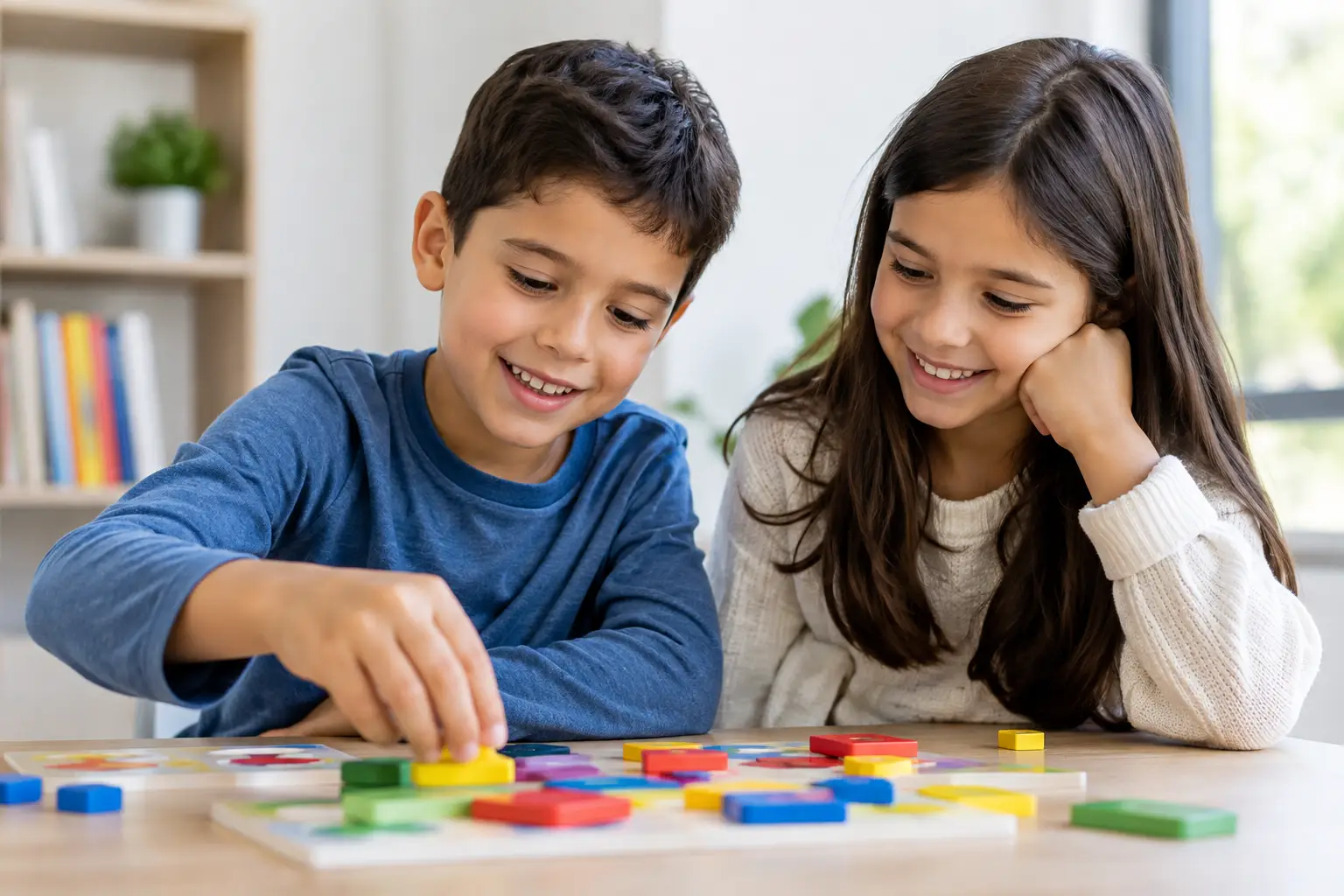
A child can recite a rule at the kitchen table and forget it by Friday. Put that same rule inside a decision that changes what happens next, and the memory has somewhere to live. That is the promise of educational games: learning becomes part of the experience, not a pause in the fun.
For parents and educators, the question is not whether play can teach. Children have always learned through play. The more useful question is what kind of play creates understanding that lasts after the game is over.
Why educational games hold attention differently
Attention is not a switch that learners simply turn on because a lesson is important. It responds to stakes, curiosity, choice, and the feeling that an action matters. A well-designed game gives players a reason to look closely. They need to notice clues, weigh options, solve a problem, or adapt when a plan fails.
That focus changes the role of information. Facts are no longer items to memorize for a quiz. They become tools. A player may need to understand a map to reach safety, recognize a pattern to make a better choice, or interpret evidence before deciding whom to trust. The knowledge has a job to do.
This matters especially for learners who disengage when instruction feels distant from real life. Reading, listening, and memorizing can be useful tools, but they are not the only paths to understanding. Some minds learn best after they have moved through a situation, made a choice, and seen the result.
Play → act → discover → remember.
The sequence is simple, but it respects how learning often works. First, an experience earns attention. Then action gives the learner ownership. Discovery turns information into insight. Repetition and feedback help the useful pattern remain.
What makes a game truly educational?
Not every game with a math question, vocabulary card, or historical costume creates meaningful learning. A quiz can be useful practice. A worksheet can reinforce a skill. But placing those activities behind points and bright graphics does not automatically make them a game worth remembering.
Educational games are strongest when the learning is embedded in the player’s actions. The player should use the idea, not merely answer a question about it. If the learning disappears and the game still works exactly the same, the educational element may be an add-on rather than the engine of the experience.
Consider the difference between being asked to identify the best solution from four options and having to choose a solution while resources are limited, time is passing, and consequences unfold. The second approach asks more of the learner. It asks them to observe, decide, test, adjust, and try again.
That does not mean every learning experience needs high drama or complicated rules. The right level of challenge depends on the learner’s age, prior knowledge, and confidence. A game that is too easy becomes background noise. A game that is too difficult can turn curiosity into frustration. Good design leaves room for effort while making progress visible.
Choice gives knowledge meaning
Choices are where information becomes personal. When a player decides what to do, they form a prediction: this action will help, this route is safer, this clue matters, this strategy is worth trying. Feedback then answers that prediction.
A correct choice can reinforce a useful pattern. A mistake can do the same when the game makes the consequence understandable and allows another attempt. Failure is not automatically discouraging. In a thoughtful game, it is information. The player learns, “That approach did not work here. What should I notice next time?”
This is why immediate feedback matters. Waiting days for a graded paper separates action from result. Seeing the result within the experience keeps the learning loop intact.
Repetition should feel like progress
Repetition is how patterns settle into memory, but repetition does not have to feel like drilling. In a compelling adventure, players may revisit a skill because the situation changes. They use the same underlying knowledge in a new setting, with a new risk or goal.
That kind of repetition is valuable because it asks learners to recognize what carries over. They are not only recalling an answer. They are seeing a pattern across situations. That is closer to the way knowledge is used beyond school.
The real-world advantage of adventure
Abstract learning becomes easier to hold when it is tied to a believable situation. Real-world adventures give players context: a mission, a community problem, an investigation, a journey, or a decision with competing priorities. Context does not make a concept less rigorous. It gives the concept a reason to matter.
For example, communication skills become more than a definition when a player must interpret what someone means, decide how to respond, and manage the outcome. Financial reasoning becomes more than numbers on a page when choices affect a limited budget. Scientific thinking becomes more than vocabulary when observations lead to a conclusion that must be tested.
The goal is not to pretend that every subject has one easy answer. Real situations often involve uncertainty. Players may need to choose with incomplete information, reconsider an assumption, or accept a trade-off. Those are meaningful habits of mind for school, work, relationships, and everyday life.
This is also where games can support different learners. A learner who struggles to explain an idea before trying it may understand it clearly after living the scenario. Another learner may benefit from discussing choices aloud with a parent, teacher, or group. The game creates a shared event, then conversation can deepen what happened.
How parents can choose educational games with purpose
Start with the experience, not the label. Ask what the player actually does minute by minute. Are they making decisions? Are they observing closely? Do their choices affect the outcome? Is feedback clear enough to help them improve?
Look for a reason to return. A game does not need endless content to be valuable, but it should invite learners to try a new strategy, notice something missed, or apply a skill again. A single memorable experience can start an insight. Revisiting it is often what helps that insight become durable.
It also helps to match the game to the learner rather than chasing the most advanced topic. A teenager may enjoy the independence of a complex scenario. A younger child may need simpler decisions and a shorter play session. Some learners thrive with competition; others learn more freely when the goal is collaborative discovery. There is no universal best format.
After play, resist the urge to turn every moment into a test. A better prompt is often, “What made you choose that?” or “What would you do differently next time?” These questions invite reflection without pulling the learner out of the experience. They help connect action to insight.
How educators can make play part of learning
In a classroom, educational games work best when they are treated as a learning environment, not a reward after the “real” lesson. The game can introduce a problem before direct instruction, give students a chance to apply a concept, or reveal misunderstandings that need attention.
The teacher’s role shifts from delivering every answer to noticing how students reason. Which clues do they ignore? Where do they hesitate? What strategies do they repeat? Those observations can guide a short discussion or a follow-up activity that feels connected to what students just experienced.
Debriefing has value, but it should remain focused. Ask students to name the evidence behind a decision, compare two strategies, or explain a turning point. A long lecture after an active game can drain its energy. A few well-chosen questions can help learners carry the insight into the next context.
Learning that stays with the learner
The best educational games do not ask learners to stop being curious so they can learn. They use curiosity as the path. They invite players into a situation, give them agency within it, and let feedback shape the next attempt.
At ImmersiveMinds Games, that idea is central: live the experience, then keep the knowledge. Learning does not need to feel like pressure to be serious. It can begin with an adventure that makes a learner want to find out what happens next.
When choosing a game for a child, a classroom, or yourself, look for the moment after play when someone says, “Wait, I see why that happened.” That moment is more than a correct answer. It is a pattern taking shape - one the learner can carry into the next real-world choice.