
Best Interactive Tools for Teachers That Engage
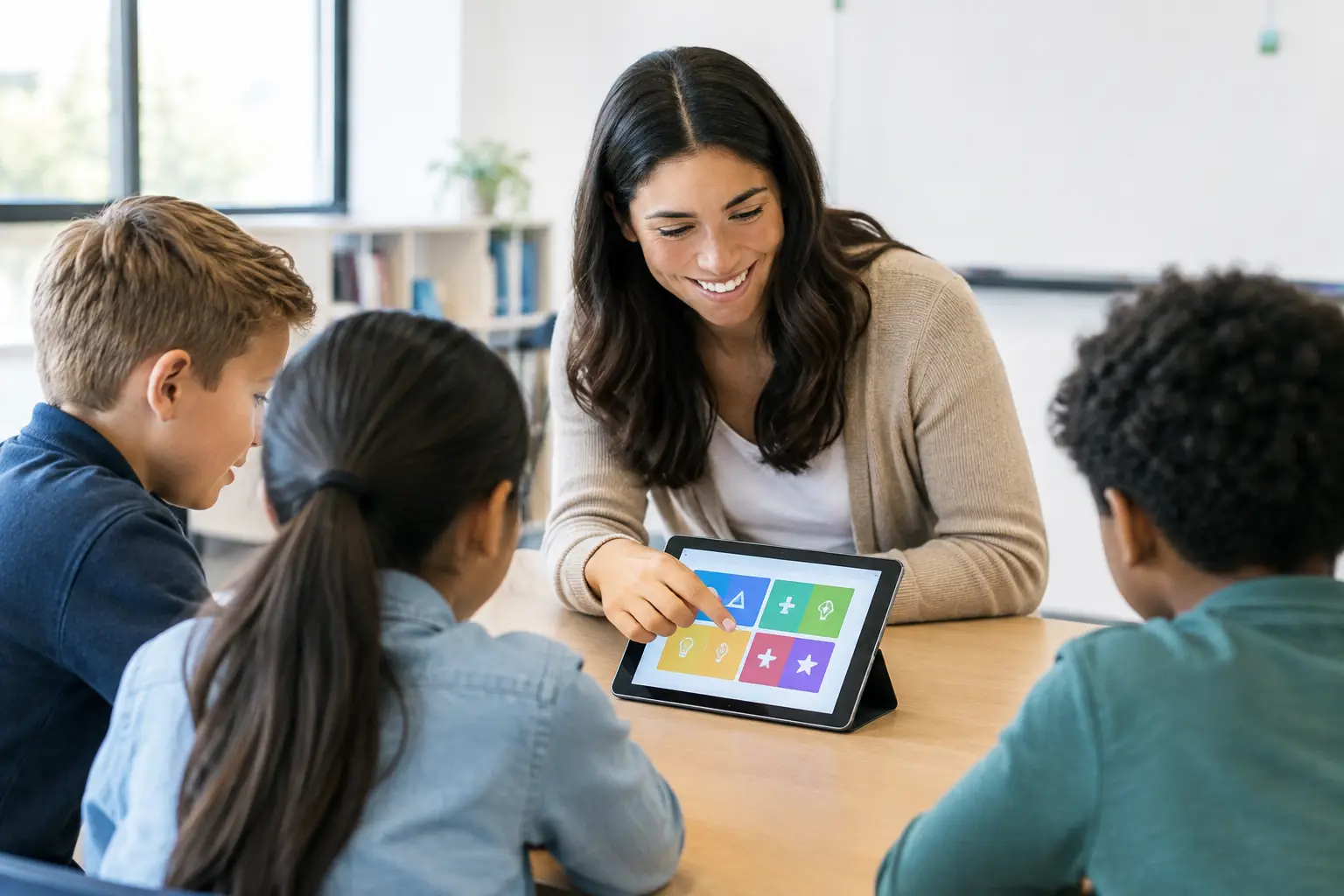
A student can repeat a definition and forget it by lunch. Give that same student a role, a problem, a decision, and a consequence, and the lesson has somewhere to live. The best interactive tools for teachers do not simply make class louder or more digital. They give learners a reason to pay attention, act on what they know, and see what happens next.
That difference matters. A flashy activity can fill 20 minutes. An interactive experience can form a pattern: I noticed this, I made a choice, I received feedback, and now I understand why it mattered. For students who struggle to learn through listening, reading, or memorizing alone, that pattern can change the entire feeling of school.
What makes a tool truly interactive?
A tool is not interactive just because students tap a screen, drag a shape, or submit an answer. Those actions may be useful, but participation becomes meaningful when a learner's choice changes the experience.
The strongest tools create a small loop of attention, action, feedback, and repetition. A learner sees a challenge, tries a response, notices the result, and adjusts. The lesson is no longer something delivered from the outside. It becomes something the learner has lived.
For teachers, this does not mean every class period needs a complex game or a room full of devices. It means choosing tools that make student thinking visible. The best option depends on your objective, age group, available time, and how much independence your students can handle. A fast check for understanding calls for a different tool than a multi-day inquiry into ecosystems, civic decisions, or historical events.
The best interactive tools for teachers create choices
Choice-driven scenario games
Scenario games are especially powerful when the subject involves judgment, consequences, or competing priorities. Students might manage a limited budget, respond to a community emergency, negotiate a treaty, investigate a mystery, or make decisions as a scientist, journalist, entrepreneur, or explorer.
The learning happens because players must use information to move forward. A wrong choice is not simply marked incorrect. It produces a result they can examine. That feedback gives knowledge a purpose, and a second attempt gives students room to improve without the pressure of being publicly wrong.
This format works well for social studies, financial literacy, language arts, science, and career exploration. It can also support discussion afterward: What did you choose? What did you miss? What would you do differently with new information? ImmersiveMinds Games is built around this kind of real-world adventure, where learners live a scenario first and carry its insight forward.
The trade-off is preparation. A worthwhile scenario needs a clear goal and enough room for genuine decisions. If every path leads to the same outcome, students will quickly recognize that their choices do not matter.
Live response and polling tools
A well-timed question can shift the energy of a room. Live response tools let every student answer at once, whether they are predicting an outcome, choosing the strongest evidence, rating their confidence, or sharing an anonymous question.
Their real value is not the graph on the screen. It is what the graph tells you to do next. If half the class selects a common misconception, pause there. Ask students to defend each choice, run a short demonstration, then pose a related question again. The feedback loop becomes part of the lesson rather than a score at the end.
These tools are excellent for quick formative assessment and low-risk participation. They are less useful when every prompt is factual and final. Mix in prediction, explanation, and confidence questions so students must think beyond guessing the right answer.
Collaborative boards and shared workspaces
A shared digital board can turn a class from an audience into a group of contributors. Students can sort evidence, build timelines, post observations, compare solution paths, collect research questions, or add annotations to an image, map, or short passage.
This works best when contributions must connect. Instead of asking every student to post one fact about the water cycle, ask groups to build a cause-and-effect map showing what changes when temperature rises. Instead of collecting isolated vocabulary definitions, have students group terms by relationship and explain the pattern they see.
Collaboration needs structure to stay purposeful. Give students roles, a time boundary, and a clear definition of useful work. Without those guardrails, a board can become a crowded wall of comments rather than a record of thinking.
Simulations and virtual investigations
Some lessons are difficult to experience safely, affordably, or quickly in real life. Simulations give students a place to manipulate variables, observe change, and test an idea more than once. They can model erosion, design a habitat, balance forces, trace an outbreak, or explore how policy choices affect a fictional community.
The key is to frame the simulation as an investigation, not a free-play reward. Start with a question students can test. Ask them to predict what will happen before they change a variable. Then have them explain what the result suggests and test again.
Simulations are valuable because repetition feels natural. Students want to try another approach because they want a different outcome. That is a far stronger reason to practice than being told to complete another worksheet.
Creation tools for stories, models, and explanations
When learners create something for someone else to understand, they reveal far more than they do on a multiple-choice quiz. Digital storytelling, simple animation, audio recording, visual modeling, and presentation tools can ask students to turn knowledge into a message.
A fourth grader might narrate the journey of a water droplet. A middle school student might create a public-service announcement based on data. A high school student might produce a short briefing that explains a court case from more than one viewpoint. The format is flexible, but the intellectual work should stay clear: select evidence, organize ideas, and explain cause and effect.
Creation can take more time than a short response activity. Use it for learning that deserves depth, and provide a simple rubric so students understand that ideas and reasoning matter more than decorative effects.
Choose tools by the learning move, not the trend
Before selecting a platform, game, or activity, name the action you want students to take. Do they need to notice a pattern, make a decision, test a claim, explain their reasoning, collaborate, or practice a skill until it becomes more fluent?
Then ask whether the tool gives feedback that helps them improve. A quiz that reports only right or wrong has limited teaching power. A tool that shows why an approach failed, lets learners compare options, or makes a second attempt meaningful can support deeper understanding.
Also consider access with care. The most effective interactive experience is one every learner can enter. Offer clear instructions, manageable choices, visual supports, discussion time, and more than one way to participate. A student who needs processing time may contribute more thoughtfully through a shared board than through a rapid-fire competition. Another may understand a concept best after acting it out in a scenario.
Make participation lead somewhere
Interactive tools work best when they are part of a learning arc, not an interruption from it. Begin with a question that creates curiosity. Let students act. Pause to surface what they noticed. Give them another chance to apply the insight in a new context.
That final step matters. A student who succeeds once may have followed a cue. A student who recognizes the same pattern in a new situation is beginning to own the knowledge.
You do not need to replace every direct explanation. Teachers still provide context, language, safety, and perspective. But when students have first encountered the need for an idea through a meaningful challenge, your explanation lands differently. It answers a question they are already carrying.
The goal is not more screen time, more noise, or more novelty. It is a classroom where attention has a job to do. Give learners something worth deciding, a safe way to learn from the result, and time to try again. Play, act, discover, remember.